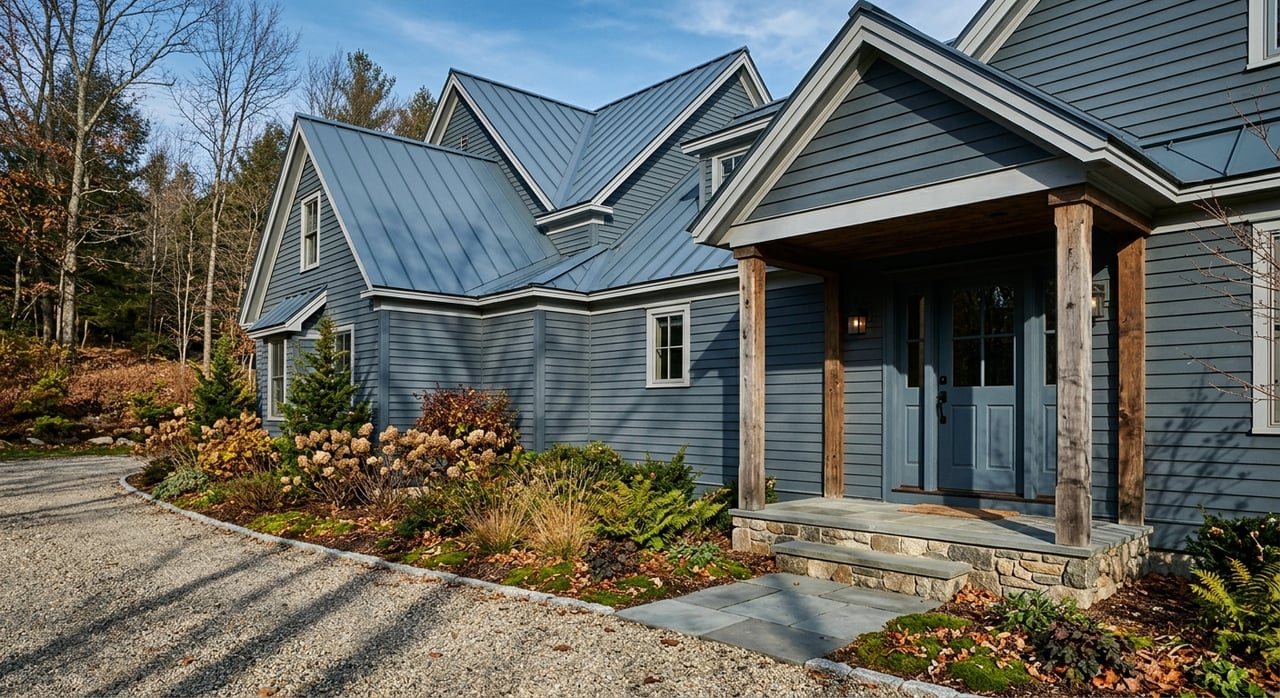
If you are thinking about building a custom home in Hollis, NH, the house plan is only part of the story. In this market, your timeline and budget can be shaped just as much by zoning, lot layout, septic design, driveway approvals, and inspection sequencing. The good news is that when you understand the process upfront, you can avoid many of the delays that catch buyers off guard. Let’s walk through the steps that matter most.
Start With the Lot
Before you fall in love with a parcel, make sure it can support the home you want to build. In Hollis, lot rules are detailed, and the difference between one parcel and another can have a big effect on what is possible.
For many buyers, the key zoning districts are Residential and Agricultural and Rural Lands. In both districts, single-family and two-family dwellings are allowed, both require 2 acres per dwelling unit and 200 feet of frontage, and both have a maximum building height of 38 feet. The front-yard depth differs, though, with 50 feet required in R&A and 100 feet required in RL.
That may sound manageable, but frontage and buildable area deserve close attention. Hollis also states that no lot may be subdivided unless it contains a compliant building area, which means not every large parcel will work the way you expect.
Understand Backland Lot Rules
Backland lots come with stricter standards. Hollis requires 4 acres per dwelling unit, 20 feet of frontage on a public road for each dwelling, and no building can be closer than 200 feet from an existing public road.
If you are considering a deep flag lot or a parcel set far off the road, these rules can change the layout, utility runs, and total cost of the project. A lot that looks private and appealing on paper may be much harder to develop in practice.
Check Overlay Districts Early
Some parcels are affected by overlay districts that can reshape the entire site plan. In the Aquifer Protection Overlay Zone, more restrictive rules apply and impermeable surfaces may cover no more than 15% of the lot.
In the Water Supply Conservation Zone, septic tanks or leach fields may not be placed within 150 feet of wetlands or standing water. The ordinance also requires sewage disposal systems in that zone to be designed by a professional sanitary engineer.
Confirm the Approval Path
Once a lot looks promising, your next move is to confirm which boards and departments will need to sign off. This is where custom-home timelines in Hollis often start to expand.
The Planning Board handles subdivision and site-plan applications and meets at 7 p.m. on the third Tuesday of each month. The board may also require preliminary conceptual consultation or design review if a proposal involves issues like access, drainage, or grading.
That matters because a parcel with constraints may need more review than a clean, straightforward building lot. Knowing that early helps you plan your timing and professional team.
Know the Building Department Rules
Hollis requires permit applications to be submitted in person, not by mail. Inspection requests are handled by phone, and the town will not issue a building permit if there are unresolved zoning, site-plan, or subdivision violations.
For new permits, the town is using the 2021 IBC and IRC family, the 2023 NEC, and the 2021 NFPA 101 and NFPA 1 standards. Your builder and design professionals should already be working to those standards, but it is still smart to confirm that everyone is aligned from the start.
Do Not Start Site Work Too Soon
If you plan any site disturbance before your building permit is issued, Hollis requires a Notice of Site Development to be filed with the Planning Department first. The ordinance also states that excavation for a foundation or other structural work cannot begin until the building permit has been issued.
In short, the sequence matters. Moving equipment onto the site too early can create setbacks instead of progress.
Build the Permit Package
A complete permit package helps keep your project moving. For a new home, Hollis asks applicants to submit three forms to the Building Department: the Building Permit, the Checklist for New Single Family Home, and the Residential Energy Code Application.
The new-home checklist requires a scaled site plan showing setbacks from rights-of-way, property lines, and wetlands. It also needs the septic system and driveway shown on the plan, and a certified foundation plan is required before framing.
Match the Septic Design to Bedrooms
In Hollis, septic design is tied directly to the proposed number of bedrooms. The town requires an approved septic system design signed by both the town and NHDES for that bedroom count.
That is an important detail if you are comparing floor plans or considering future flexibility. Bedroom count is not just a design choice. It directly affects approvals and system sizing.
Coordinate the Driveway Permit
Driveway permits are handled separately. If your lot is on a town road, the permit comes from Public Works. If it is on a state road, the permit comes from NH DOT.
This is one more reason to review the lot with a local process in mind. Access approval is a core part of buildability, not an afterthought.
Plan Site Work and Utilities
In Hollis, site work can be one of the biggest variables in both budget and schedule. Driveway design, septic layout, wetlands, ledge, and well testing all play a role.
Driveway Requirements in Hollis
New home driveway applications must include a separate plan that shows driveway access and lot-line dimensions. Hollis allows only one access and egress point per lot, new driveways must be at least 10 feet wide, and the slope cannot exceed 8 percent.
Applications must be filed at least three working days in advance. Driveway permits are valid for two years, and the current fee schedule lists a $75 fee for a new driveway permit.
If wetlands are crossed or infringed upon, a state dredge-and-fill permit is also required. That can add another layer of planning, so it is worth reviewing the driveway path very early in the process.
Septic Design Is Site Specific
Septic planning in Hollis involves more than placing a tank and leach field. The town’s septic checklist calls for test pits, erosion control, a 20-foot property-line setback to the leach field, and a 100-foot no-disturbance setback from wetlands and wetland soils.
There are also protective radii around the well: 75 feet to the tank and 100 feet to the leach field. Where ledge or seasonal high water tables are present, the checklist requires at least four feet of in-place soil above ledge or impermeable strata and two feet above the seasonal high water mark before fill. In the Aquifer Protection Overlay Zone, the leaching field bottom must be at least six feet above the seasonal high water table.
Well Testing Comes at the End
Private wells in Hollis must comply with NHDES regulations. The town will not issue a Certificate of Occupancy until the water source has been tested and the results have been submitted no earlier than 60 days before the CO.
The testing must be completed by a New Hampshire Certified Well Testing Laboratory. This is a closeout item, but it should still be on your checklist long before move-in.
Budget Beyond the House Itself
Many custom-home buyers focus first on construction costs, but the land development side can be just as important. In Hollis, permit fees are only one part of the budget picture.
The town’s fee schedule includes a $25 general application fee, a $75 new-driveway permit fee, and a $500 minimum for engineering-consultant site inspections related to driveway, wetland-buffer, and erosion-control issues. Those are local fees you can plan around early.
Broader site-cost ranges can also help frame expectations. Recent consumer cost guides estimate light land clearing at about $600 to $2,100, dense clearing at about $3,200 to $5,800, conventional septic systems at about $3,500 to $8,500 installed, engineered septic systems at about $15,000 to $50,000, and a typical 200-foot residential well at about $6,000 to $16,000.
These are not Hollis-specific bids, but they show why raw land and custom construction need careful upfront budgeting. A beautiful lot can still become expensive if access, drainage, or subsurface conditions are challenging.
Follow the Inspection Sequence
Inspections in Hollis are staged and specific. The town expects inspections for foundation elements before backfill, rough electric, rough plumbing, rough mechanical, rough frame, insulation, LPG tank inspection, chimney or fireplace inspection, and then final inspection on completed work.
This sequence means your builder, subs, and inspectors all need to stay coordinated. Delays often happen when one trade finishes out of order or paperwork is missing when the next inspection is due.
Certified Foundation Plan Matters
One detail worth highlighting is the certified foundation plan required before framing. That step connects the approved site layout to the actual structure location.
For buyers, this is part of protecting the long-term usability of the property. It helps confirm that the home is being placed in compliance with approved setbacks and site conditions.
Prepare for Certificate of Occupancy
In Hollis, final closeout is not just one last walkthrough. The town requires 7 to 10 days of advance notice for the final inspection tied to the Certificate of Occupancy, and the CO package is extensive.
It includes driveway approval, a certified plot plan with monumentation, state septic approval for operation, granite bounds for subdivision-created lots, fire-department approval, water test results, subcontractor licenses, blower-door and duct-pressure test results, a posted house number, smoke detectors, and working heat, hot water, and sanitary facilities.
Move-In Depends on Full Coordination
This is why custom-home delivery in Hollis is often delayed more by sequencing and documentation than by framing alone. The exterior site package and the interior systems have to close out together before you can occupy the home.
When zoning, planning, driveway, septic, well, building, and fire approvals are handled in the right order, the process is much smoother. When they are not, even a nearly finished house can sit waiting.
Why Local Guidance Helps
Building a custom home in Hollis can be rewarding, but it is rarely simple. You are not just choosing finishes and floor plans. You are navigating zoning, land constraints, approval timing, and a very specific closeout process.
If you are buying land, comparing buildable lots, or planning a new-construction purchase in Southern New Hampshire, local guidance can make a real difference. Working with someone who understands land and new construction can help you spot red flags early, ask better questions, and move forward with more confidence.
If you are considering land or a custom build in Hollis, Donald Goudreau can help you evaluate opportunities, understand the process, and make smarter decisions from lot search through closing.
FAQs
What zoning rules matter most for building a custom home in Hollis, NH?
- For many buyers, the biggest items are minimum lot size, frontage, front-yard setback, and height limits. In key Hollis districts, single-family and two-family dwellings require 2 acres per dwelling unit, 200 feet of frontage, and a maximum height of 38 feet, with front-yard depth varying by district.
What makes backland lots harder for a custom home in Hollis, NH?
- Backland lots have stricter standards, including 4 acres per dwelling unit, 20 feet of frontage on a public road for each dwelling, and a rule that no building can be closer than 200 feet from an existing public road.
What permits are needed for a new home in Hollis, NH?
- A typical new-home process includes a building permit package, septic approvals, and a driveway permit. Depending on the lot, Planning Board review, a Notice of Site Development, or additional wetland-related approvals may also be required.
What does Hollis require for septic planning on a custom home lot?
- Hollis requires an approved septic system design tied to the proposed number of bedrooms, along with site-specific standards for setbacks, test pits, erosion control, and separation from wetlands, wells, ledge, and seasonal high water tables.
What is needed for a Certificate of Occupancy in Hollis, NH?
- The town requires final inspection scheduling 7 to 10 days in advance and a full closeout package that includes items such as driveway approval, certified plot plan, septic operation approval, fire-department approval, water test results, subcontractor licenses, performance testing, house number, smoke detectors, and working utilities and sanitary facilities.